
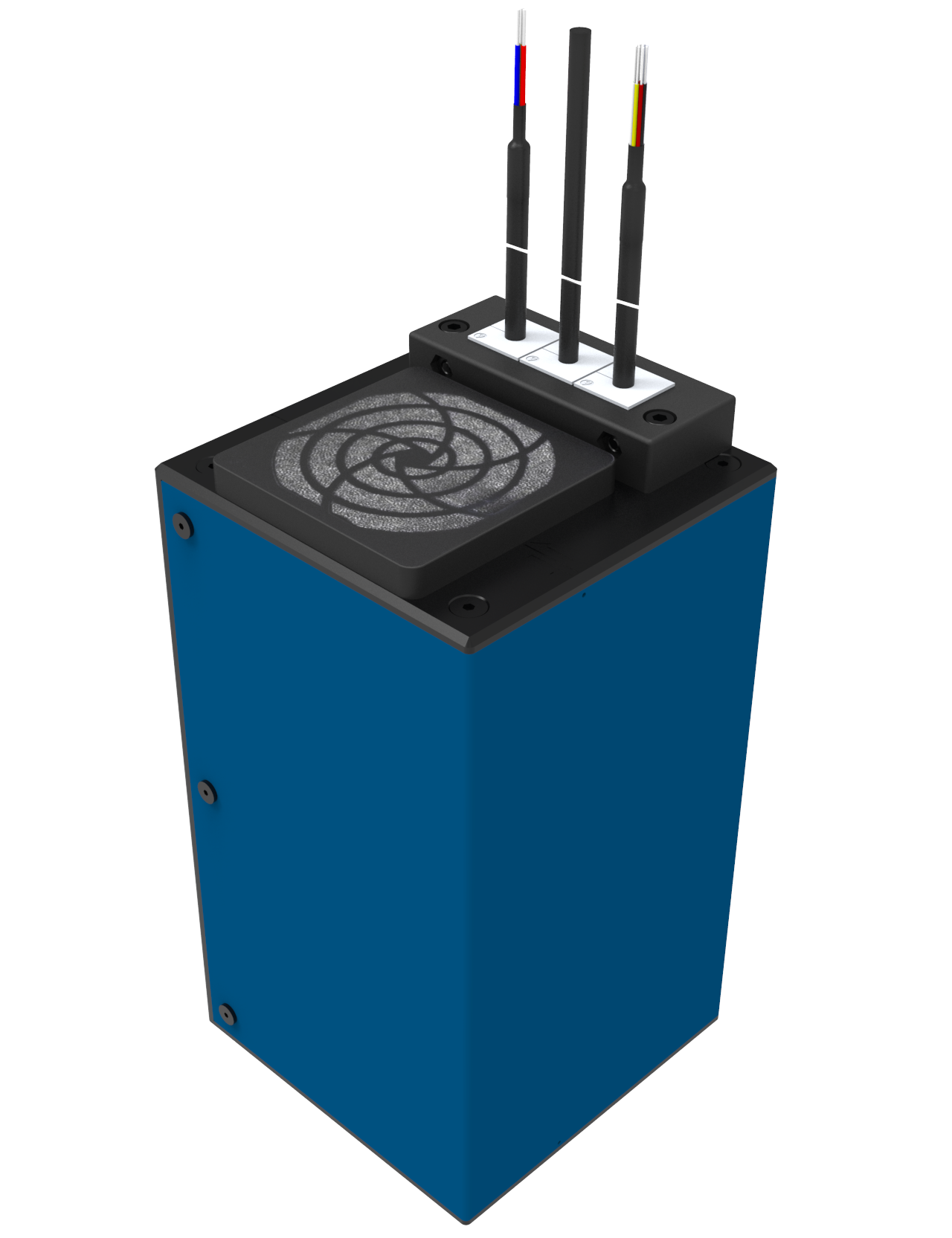
The CAMCODE10® utilizes direct optical signals from untouched surfaces to instantly analyze their structure and provide real-time movement data, converted into incremental encoder electrical signal pulses proportional of the displacement.
Benefits:
Eliminates kinematic chain errors
Enables ultra-precise stitching and alignment
Typical applications:
Speed encoder for industrial inkjet printhead:
X and Y direction standard A/B incremental outputs
Trigger detect output
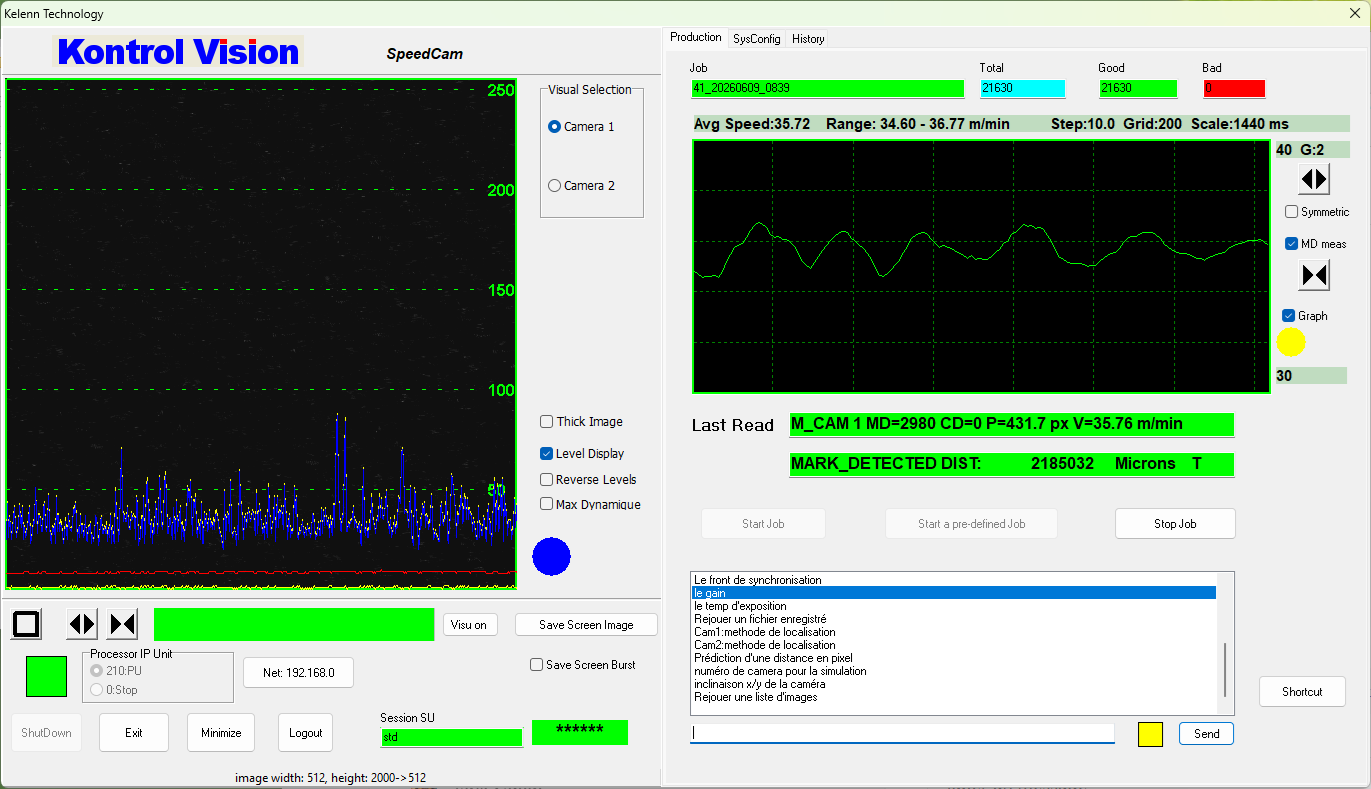
Analysis of the stability of the conveyor underneath the inkjet printhead. Real-time motion data is transmitted via Ethernet for additional user processing such as maintenance, absolute movement measurement, unwanted mechanical vibration, etc.
Exceptional Accuracy & Resolution: Advanced signal processing and AI algorithms empower the CAMCODE®10 to deliver exceptional accuracy and high resolution, reaching 4800 dpi at speeds up to 6 m/s with minimal interpolation errors.
The absolute movement is tracked with an accuracy of better than one micrometer.
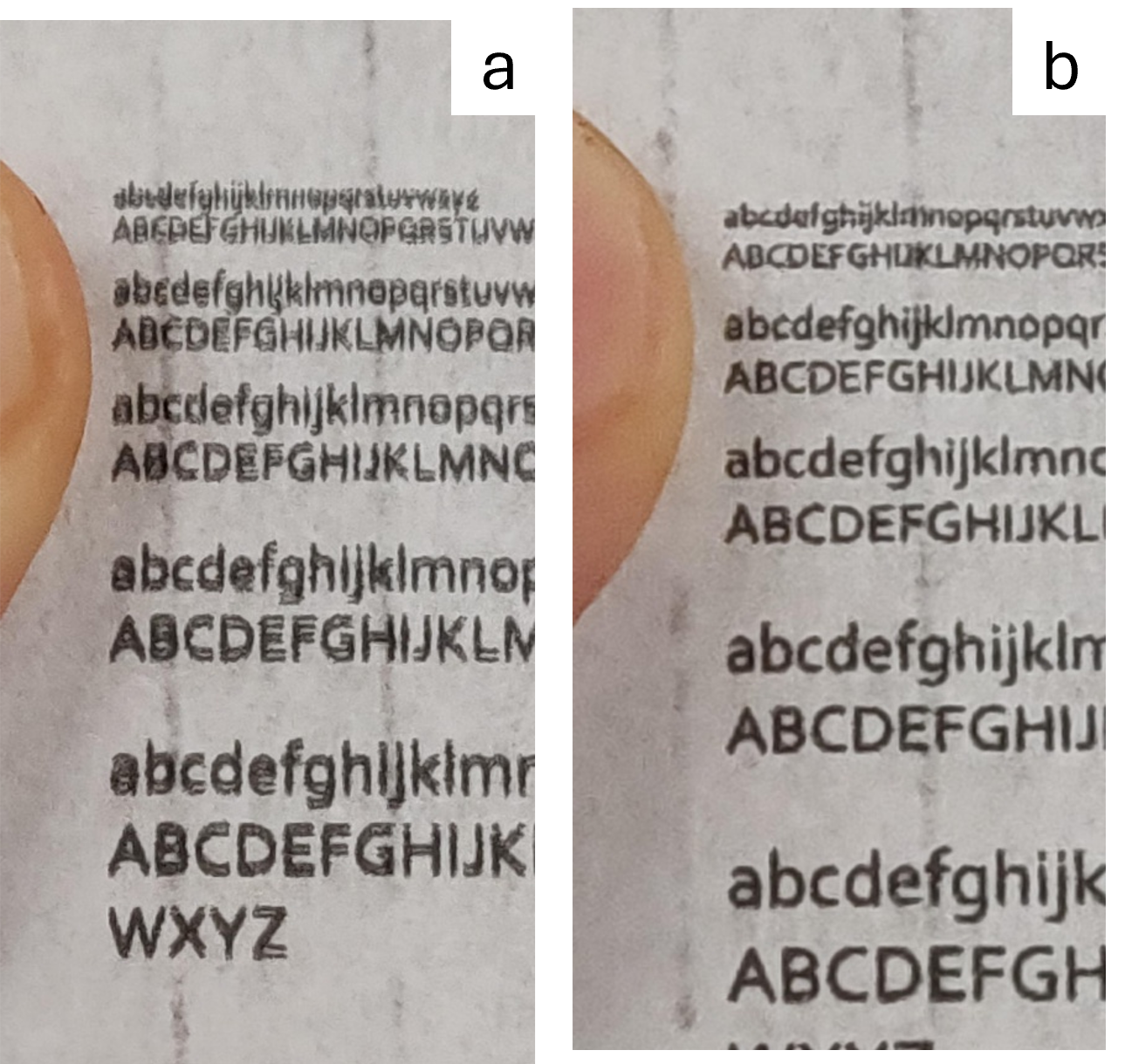
Note : samples printed at 1200 dpi, 200m/mn with dual in line print head.
Fig. a: with standard encoder wheel
Fig. b: with camcode encoder
Maintenance Software: this easy-to-use software communicates via Ethernet to provide:
The Ethernet connection also allows the client software to configure the Camcode and upload user profiles.
Simplified Installation: No glass scales or tracking wheels in contact with the moving media. Measurement is performed from a distance of a few centimeters without any additional devices, reducing integration time and system complexity.